Stay
Visit a locality browsing the menu on the left. In each Italy area you can then choose the best touristical structures we are proposing.
Most viewed in
Italy
-
Sunland since 1979 is the leading tour operator for ground hanling services on Amalfi Coast, Cilento and Neapolitan Riviera. Sunland is the partner of some of the biggest tour operator world wide. Our attentive staff is at your service for: Hotel accomodation...
-
The Amalfi Coast, suspended between sea and Sky, is a land of an amazing beauty. Our wish, having the pleasure to be your driver/guide, is to share with you the traditions, art, history, landscapes and the beauty that makes this land, " The Divine Amalfi...
-
Self-catering villas and apartments on the Amalfi Coast with pool, access to the sea and air conditioning. Amalfi Vacation owns and manages all the Amalfi Coast villas shown on the website. We are specialists in luxury villas and self-catering apartments...
-
Located on the famous AmalfiCoast drive, a few minutes from the famous town of Amalfi, the Santa Caterina enjoys a panoramic coastal setting of incomparable beauty. The history of this special resort is as impressive as its surroundings. In 1880, Giuseppe...
-
Situated on the last bend of Amalfi's promenade and beach, this hotel is on four levels. Bright and Mediterranean in style, the Marina Riviera is a converted old noble villa. All rooms are spacious & tastefully furnished, and have open windows or balconies...
Print this page
Send to a friend by e-mail
The Mattanza of the Tuna
-
-
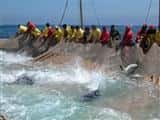
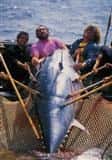
The mattanza (from the Spanish word matar, meaning to kill) is a complex and ritual way of catching tuna fish which characterized the island of Favignana every year at the end of May. The tuna fishing has very ancient origin, possibly even to the Phoenicians, but it was under the Arabian domination that the most fundamental elements of this "rite" were firmly established. The fishermen of tune (also called tonnaroti) make the same gestures, pronounce the same prayers, sing the same "cialome" (ritual sings) for many centuries.
Times and practices are fixed by the rais, the chief of the tuna station, who is magician, saint and sorcerer at the same time. Gioacchino Cataldo, also known as Poseidon, is the actual rais of the tuna station of Favignana, listed in the Intangible Cultural Heritage: he is a living treasure which can transmit to the future generations oral traditions, expressions and ancient rituals.
The fishing boats put out to sea to lay the nets in a long corridor which the tuna are forced to follow. The last nets are dropped like barriers to form antechambers that will prevent too many fish from being gathered in a single unit, thus averting the risk of the nets being torn and the fish escaping. Beyond these antechambers is laid the "camera della morte" (the room of the death), an enclosure provided by tougher netting and often closed along the bottom. When an appropriate number of fish are deemed to be trapped in the chamber, the rais orders to begin the mattanza.