Stay
Visit a locality browsing the menu on the left. In each Italy area you can then choose the best touristical structures we are proposing.
Most viewed in
Italy
-
Sunland since 1979 is the leading tour operator for ground hanling services on Amalfi Coast, Cilento and Neapolitan Riviera. Sunland is the partner of some of the biggest tour operator world wide. Our attentive staff is at your service for: Hotel accomodation...
-
The Amalfi Coast, suspended between sea and Sky, is a land of an amazing beauty. Our wish, having the pleasure to be your driver/guide, is to share with you the traditions, art, history, landscapes and the beauty that makes this land, " The Divine Amalfi...
-
Self-catering villas and apartments on the Amalfi Coast with pool, access to the sea and air conditioning. Amalfi Vacation owns and manages all the Amalfi Coast villas shown on the website. We are specialists in luxury villas and self-catering apartments...
-
Located on the famous AmalfiCoast drive, a few minutes from the famous town of Amalfi, the Santa Caterina enjoys a panoramic coastal setting of incomparable beauty. The history of this special resort is as impressive as its surroundings. In 1880, Giuseppe...
-
Situated on the last bend of Amalfi's promenade and beach, this hotel is on four levels. Bright and Mediterranean in style, the Marina Riviera is a converted old noble villa. All rooms are spacious & tastefully furnished, and have open windows or balconies...
Print this page
Send to a friend by e-mail
Fishing with lamps
-
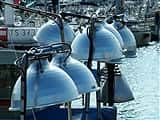
Until the early 20th century, fishing for bluefish in the Gulf of Trieste was carried out primarily with driftnets called sardellere, while along the nearby coast of Croatia fish were attracted by lights placed on a small boat in a confined area (peschiera) which was then surrounded by the nets of larger boats. An expensive method, but after the First World War Neapolitan fishermen who moved to Trieste began to use halogen lamps to attract the fish no longer towards the coast but seawards. The post-war exodus from Istria expanded the local fishing fleet and catches of bluefish grew to such an extent that new markets had to be sought and new methods of canning and conserving with lamps has been further developed, with technological innovations that led to protection and manoeuvrability of the lamps, the improvement of the light generators, the introduction of electronic instruments and new materials for making the nets.
Point of interest
The Saccaleve, local Triestine boats used for lampfishing, leave port at dusk accompanied by a small auxiliary boat, a caiccio. They have engines of between 80 and 250hp, and are never more than 16 metres in length. Boats as small as these can be used because of the limited area of the fishing grounds, the shallow depth of the water and the short duration of a fishing trip - rarely more than eight hours.