Stay
Visit a locality browsing the menu on the left. In each Italy area you can then choose the best touristical structures we are proposing.
Most viewed in
Italy
-
Sunland since 1979 is the leading tour operator for ground hanling services on Amalfi Coast, Cilento and Neapolitan Riviera. Sunland is the partner of some of the biggest tour operator world wide. Our attentive staff is at your service for: Hotel accomodation...
-
The Amalfi Coast, suspended between sea and Sky, is a land of an amazing beauty. Our wish, having the pleasure to be your driver/guide, is to share with you the traditions, art, history, landscapes and the beauty that makes this land, " The Divine Amalfi...
-
Self-catering villas and apartments on the Amalfi Coast with pool, access to the sea and air conditioning. Amalfi Vacation owns and manages all the Amalfi Coast villas shown on the website. We are specialists in luxury villas and self-catering apartments...
-
Located on the famous AmalfiCoast drive, a few minutes from the famous town of Amalfi, the Santa Caterina enjoys a panoramic coastal setting of incomparable beauty. The history of this special resort is as impressive as its surroundings. In 1880, Giuseppe...
-
Situated on the last bend of Amalfi's promenade and beach, this hotel is on four levels. Bright and Mediterranean in style, the Marina Riviera is a converted old noble villa. All rooms are spacious & tastefully furnished, and have open windows or balconies...
Print this page
Send to a friend by e-mail
Church of St. Antonio the Abbot
-
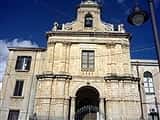
In Queen Elena Square, the church was first built around 1702-1703 thanks to the income deriving from the gold jewels that the earthquake survivors gave to the Christ at the column. The staute of 1610, made of painted wood and plaster, was positioned on the Baroque-style altar made in the '70s of the XVIII century with worthy marbles. Roccocò stuccoes and painting representing the Church's Doctors and the Evangelists, portrayed on the unique nave's wall, belong to the same period and can be attributed to Ermenegildo Martorana. Charity and Faith are represented on the vault; the Glory with Maria, St. Teresa d'Avila and St. Agostino are showed at the centre. Jaspers and onyx make the main Neoclassical altar really valuable. A big painting adorns it and shows St. Antonio Abate praying. In 1713 it was given to the holy building by the "cannamilari", sugar-cane farmers. The organ is by Platania brothers and dates back to 1838-1839.
(source: Avola, la città esagonale)